
If you’ve been researching XERF vs Sofwave, you’re likely looking for a treatment that can tighten loose skin, improve your jawline, soften wrinkles, and restore a firmer, more youthful appearance without surgery or lengthy downtime.
Today’s aesthetic technology has made remarkable advances in non-invasive skin rejuvenation, giving patients more options than ever before. Two of the most talked-about treatments are XERF, an advanced multifrequency radiofrequency (RF) system, and Sofwave, an FDA-cleared ultrasound treatment that stimulates collagen beneath the skin.
Although both treatments are designed to improve skin laxity and encourage natural collagen production, they work in very different ways. Understanding those differences is essential to choosing the treatment that best matches your skin concerns and aesthetic goals.
In this comprehensive guide, we’ll compare XERF vs Sofwave, including:
- How each technology works
- Which treatment penetrates deeper
- Comfort during treatment
- Downtime and recovery
- Results timeline
- Longevity
- Which treatment is better for the jawline
- Who makes the ideal candidate
- Whether one treatment is truly better than the other
By the end of this guide, you’ll have a clear understanding of how these two technologies compare and which may be the better choice for your unique needs.
Why Skin Tightening Becomes Necessary
One of the biggest reasons our face changes with age is the gradual loss of collagen and elastin.
Collagen is the body’s most abundant structural protein. It acts like a supportive framework beneath the skin, helping it remain firm, smooth, and resilient. Elastin provides flexibility, allowing skin to bounce back after movement or stretching.
Beginning in our mid-20s, collagen production naturally slows by approximately 1% each year. Over time, existing collagen fibers become thinner, weaker, and less organized. At the same time, elastin also breaks down due to aging, ultraviolet (UV) exposure, environmental pollutants, smoking, and everyday facial movement.
As collagen decreases, patients often begin noticing:
- Mild skin laxity
- Early jowls
- Softening jawline definition
- Neck looseness
- Smile lines
- Fine lines around the mouth and eyes
- Crepey skin
- Less facial firmness
- Loss of youthful contours
This process happens gradually, which is why many people first notice subtle changes in photographs before recognizing them in the mirror.
Fortunately, modern skin tightening technologies don’t simply mask these concerns they stimulate your body’s own regenerative response to rebuild collagen naturally.
Understanding How Non-Surgical Skin Tightening Works
Almost every modern skin tightening treatment has one primary goal:
Neocollagenesis is the natural process of producing new collagen fibers after controlled thermal stimulation.
Energy-based devices accomplish this by delivering carefully controlled heat beneath the skin without damaging the surface.
When tissue reaches a therapeutic temperature, fibroblast cells, the cells responsible for producing collagen, become activated. These fibroblasts begin creating fresh collagen and elastin over the following weeks and months.
Unlike dermal fillers, which add immediate volume, collagen-stimulating treatments improve the skin itself. Results develop gradually and often appear more natural because your own body is rebuilding the underlying support structure.
Both XERF and Sofwave rely on this principle. However, the way they deliver energy and the layers they target are fundamentally different.
What Is XERF?
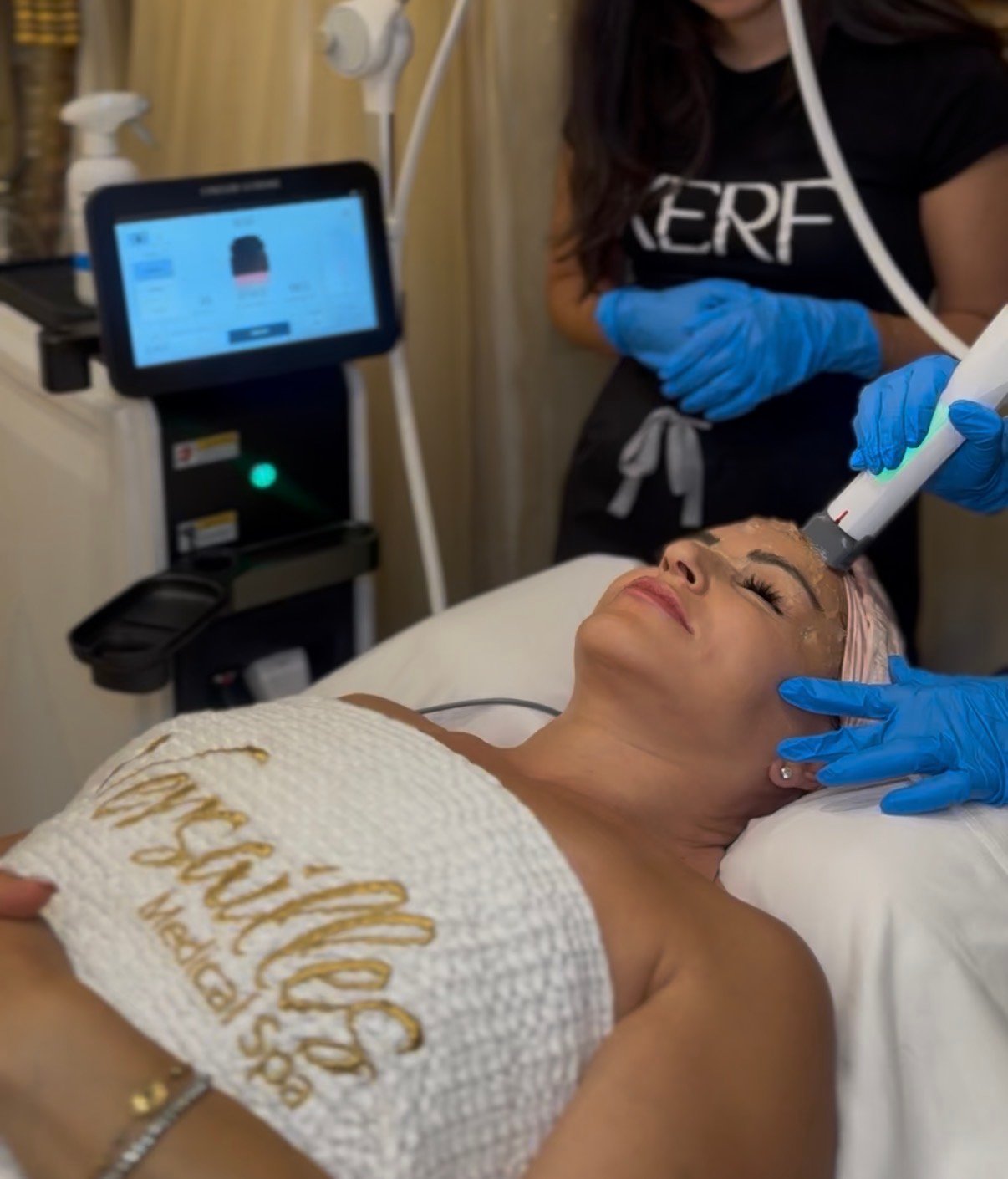
XERF is an advanced multifrequency radiofrequency skin tightening system designed to improve skin laxity, stimulate collagen production, and restore firmer, healthier-looking skin without surgery.
Unlike traditional radiofrequency devices that use a single frequency, XERF combines multiple radiofrequency frequencies simultaneously. This enables practitioners to heat multiple tissue depths during one treatment, creating a more comprehensive collagen remodeling response.
Rather than concentrating heat in only one layer, XERF distributes thermal energy throughout superficial and deeper dermal tissues, encouraging collagen production across a broader treatment zone.
The result is gradual tightening, improved elasticity, and enhanced skin quality with little to no downtime.
XERF may be recommended for:
- Mild to moderate facial laxity
- Early jowls
- Jawline contouring
- Neck tightening
- Fine lines
- Wrinkles
- Crepey skin
- Loose skin after weight loss
- Prevention of future collagen loss
- Overall skin rejuvenation
Because radiofrequency energy is color-blind, XERF is generally suitable for a wide range of skin tones when performed by a qualified provider.
How Does XERF Work?
Radiofrequency energy is an electrical current, not light or ultrasound.
As radiofrequency passes through tissue, natural resistance generates controlled heat within the dermis and subdermal layers.
That heat produces two important effects:
Immediate Collagen Contraction
Existing collagen fibers contract slightly during treatment, producing a subtle tightening effect that some patients notice shortly afterward.
Long-Term Collagen Remodeling
More importantly, thermal stimulation activates fibroblasts.
These fibroblasts continue producing new collagen for several months after treatment.
This gradual remodeling process improves:
- Skin firmness
- Elasticity
- Texture
- Facial definition
- Overall skin quality
Because collagen production continues well after the procedure, improvements often become more noticeable over time.
What Makes XERF Different?
The feature that sets XERF apart from many traditional RF systems is its multifrequency technology.
Instead of treating only one tissue depth, XERF delivers multiple radiofrequency frequencies simultaneously.
This allows providers to treat:
- Superficial dermis
- Mid-dermis
- Deeper connective tissue
During a single session.
Treating multiple layers may create a more uniform collagen response
Understanding Skin Tightening Without Surgery
The foundation of every effective skin tightening treatment is collagen remodeling.
Collagen acts like the structural framework beneath your skin. Beginning in our mid-20s, collagen production decreases by roughly 1% every year, causing the skin to gradually lose firmness and elasticity. Over time, this contributes to:
- Loose skin
- Fine lines
- Wrinkles
- Jowls
- Sagging cheeks
- Neck laxity
- Reduced jawline definition
Modern aesthetic devices create controlled heat within the deeper layers of the skin. This heat triggers the body’s natural wound-healing response, encouraging fibroblasts to produce fresh collagen and elastin over the following months.
While both XERF and Sofwave stimulate collagen, they achieve this using completely different technologies.
What Is XERF
XERF is an advanced multifrequency radiofrequency (RF) skin tightening treatment designed to address skin laxity by delivering controlled radiofrequency energy into multiple layers of tissue.
Unlike older radiofrequency devices that treat only a single depth, XERF combines multiple RF frequencies simultaneously. This allows practitioners to heat superficial and deeper tissue at the same time, creating more comprehensive collagen remodeling.
The treatment is completely non-surgical, requires little to no downtime, and can be customized according to the patient’s skin condition.
Patients often choose XERF to improve:
- Jawline definition
- Mild jowls
- Neck laxity
- Fine lines
- Facial firmness
- Skin texture
- Overall facial rejuvenation
What Is Sofwave?
Sofwave uses synchronous ultrasound parallel beam technology to stimulate collagen production.
Instead of radiofrequency energy, Sofwave delivers focused ultrasound energy into the mid-dermis while protecting the skin surface with an integrated cooling system.
Its primary goal is to trigger new collagen production without damaging the outer skin, making it an FDA-cleared treatment for lifting the eyebrows, improving neck laxity, and reducing facial wrinkles.
Like XERF, Sofwave is non-invasive and requires minimal recovery.
XERF vs Sofwave: How the Technologies Differ
Although both treatments stimulate collagen, the technology behind each is fundamentally different.
| Feature | XERF | Sofwave |
|---|---|---|
| Technology | Multifrequency Radiofrequency | Ultrasound |
| Energy Type | RF Heat | Focused Ultrasound |
| Treatment Layers | Multiple skin depths | Mid-dermis |
| Cooling | Built-in temperature control | Integrated cooling system |
| Skin Tightening | Excellent | Excellent |
| Collagen Stimulation | High | High |
| Downtime | Minimal | Minimal |
The biggest distinction is how the energy is delivered.
XERF distributes radiofrequency heat across multiple tissue depths, while Sofwave concentrates ultrasound energy within a more targeted layer.
XERF vs Sofwave for Jawline Tightening
One of the most common questions patients ask is:
Is XERF better than Sofwave for jawline?
The jawline is particularly challenging because sagging often results from several different tissue layers losing support simultaneously.
Since XERF delivers energy through multiple depths, many providers appreciate its ability to improve overall skin firmness across the jawline and lower face. This layered heating approach may benefit patients experiencing mild to moderate skin laxity and early jowl formation.
Sofwave also improves jawline appearance by stimulating collagen within the dermis and is an excellent option for patients seeking gradual lifting with minimal interruption to daily activities.
The most suitable treatment depends on:
- Degree of skin laxity
- Skin thickness
- Age
- Desired lifting effect
- Individual anatomy
- Provider assessment
Which Treatment Goes Deeper?
This is where many people become confused.
When comparing XERF vs Sofwave, effective skin tightening depends on heating the right tissue at the right temperature rather than simply reaching the deepest possible layer.
XERF’s multifrequency technology allows controlled heating across multiple depths, potentially creating a broader collagen response.
Sofwave precisely targets a specific dermal depth using ultrasound energy, focusing treatment where collagen stimulation is intended to occur.
Both technologies are designed to stimulate collagen safely, but they do so using different treatment strategies.
Comfort During Treatment
Comfort varies depending on individual pain tolerance.
Many patients describe XERF as producing a warm, gradually increasing heating sensation throughout treatment.
Sofwave treatments may involve brief pulses of heat or tingling as ultrasound energy is delivered. Integrated cooling technology is designed to improve patient comfort.
Most patients tolerate both procedures well without the need for significant recovery afterward.
XERF vs Sofwave Downtime
Another common search is XERF vs Sofwave downtime Fairfield County.
The good news is that neither treatment typically requires extensive downtime.
XERF
Most patients experience:
- Mild redness
- Temporary warmth
- Slight swelling in some cases
These effects usually resolve within hours.
Sofwave
Patients may notice:
- Mild redness
- Slight swelling
- Temporary skin sensitivity
Most individuals return to work and normal activities immediately after treatment.
Both procedures are often referred to as “lunchtime treatments.”
How Soon Will You See Results?
Collagen remodeling takes time.
Immediately after treatment, some patients notice mild skin tightening due to temporary tissue contraction.
However, the real transformation develops gradually.
XERF Timeline
- Initial improvements: 2–4 weeks
- Increased firmness: 6–8 weeks
- Continued collagen remodeling: up to 6 months
Sofwave Timeline
- Early improvements: 4–6 weeks
- Progressive lifting: 8–12 weeks
- Continued collagen production: several months
Results vary depending on age, collagen health, lifestyle, and individual biology.
Which Treatment Lasts Longer?
Both treatments rely on your body’s natural collagen production rather than adding volume artificially.
Results can last approximately one year or longer, depending on:
- Age
- Genetics
- Sun exposure
- Smoking
- Skincare routine
- Maintenance treatments
Many patients choose annual maintenance sessions to preserve their results.
Who Is a Good Candidate?
You may be a good candidate for either treatment if you have:
- Mild to moderate skin laxity
- Early jowls
- Loose neck skin
- Fine lines
- Reduced facial firmness
- Good overall skin health
- Realistic expectations
When evaluating XERF vs Sofwave, it’s important to remember that neither treatment replaces a surgical facelift for severe skin laxity. However, both are excellent non-surgical options for patients seeking firmer, smoother, and more youthful-looking skin with little to no downtime.
Can XERF and Sofwave Be Combined?
Because both treatments stimulate collagen using different energy sources, some providers may recommend combining technologies as part of a customized treatment plan. However, whether they should be performed together or in what sequence depends on your skin concerns, treatment goals, and your provider’s clinical judgment.
Your aesthetic specialist will determine if combining treatments is appropriate and create a plan tailored to your needs.
XERF vs Sofwave: Which Treatment Is Right for You?
When comparing XERF vs Sofwave, there’s no one-size-fits-all answer. Both are advanced, non-surgical skin tightening treatments that stimulate your body’s natural collagen production to improve skin firmness, elasticity, and overall facial rejuvenation. However, they use different technologies, target tissue in different ways, and may be better suited to different concerns.
XERF may be the ideal choice if you’re looking for:
- Advanced multifrequency radiofrequency (RF) technology
- Collagen stimulation across multiple tissue depths
- Improved skin firmness, contour, and elasticity
- Treatment for mild to moderate skin laxity in the face and neck
- Little to no downtime with gradual, natural-looking results
Sofwave may be a better option if you’re looking for:
Gradual lifting and tightening without surgery
Ultrasound-based collagen stimulation
A treatment with integrated cooling technology for added comfort
Improvement in fine lines, wrinkles, and mild skin laxity
A non-invasive procedure with minimal recovery time
Why Choose Versailles Medical Spa for Skin Tightening in Darien, CT?
At Versailles Medical Spa, we understand that no two faces age the same way. That’s why every skin tightening treatment begins with a comprehensive, one-on-one consultation. Our experienced aesthetic providers carefully assess your skin quality, facial anatomy, degree of skin laxity, and long-term rejuvenation goals to create a personalized treatment plan tailored specifically to you.
When comparing XERF vs Sofwave, there isn’t a one-size-fits-all answer. Both treatments are designed to stimulate collagen and improve skin firmness, but the best option depends on your unique concerns, lifestyle, and desired results. During your consultation, we’ll explain the differences between XERF vs Sofwave, answer your questions, and recommend the treatment that offers the safest and most effective outcome for your skin.
Whether your goal is to define your jawline, tighten loose skin around the neck, reduce fine lines, or achieve a naturally refreshed appearance without surgery, our team is committed to helping you look and feel your best with advanced, evidence-based aesthetic care.
Frequently Asked Questions
Is XERF better than Sofwave for jawline tightening?
Both treatments can improve jawline definition by stimulating collagen. XERF uses multifrequency radiofrequency to treat multiple tissue depths, while Sofwave uses focused ultrasound to target the mid-dermis. The most appropriate option depends on your anatomy and treatment goals.
Does XERF hurt more than Sofwave?
Both treatments are generally well tolerated. Comfort varies by individual, and providers use built-in cooling or temperature-control features to improve the treatment experience.
Which treatment has less downtime?
Both XERF and Sofwave involve minimal downtime. Mild redness or swelling may occur but typically resolves within hours to a day, allowing most patients to resume normal activities immediately.
How many treatments will I need?
Many patients see improvement after one session, though some may benefit from additional treatments based on the severity of skin laxity and desired results.
Which treatment lasts longer?
Results from both treatments can last around a year or longer, depending on individual collagen production, lifestyle factors, and maintenance treatments.