
Microneedling Stamford treatments continue to redefine standards in aesthetic medicine, offering a clinically proven approach to skin rejuvenation with high levels of patient satisfaction. Often referred to as collagen induction therapy, microneedling is grounded in a well-established biological principle: the skin has an inherent ability to repair itself when stimulated in a controlled and precise manner.
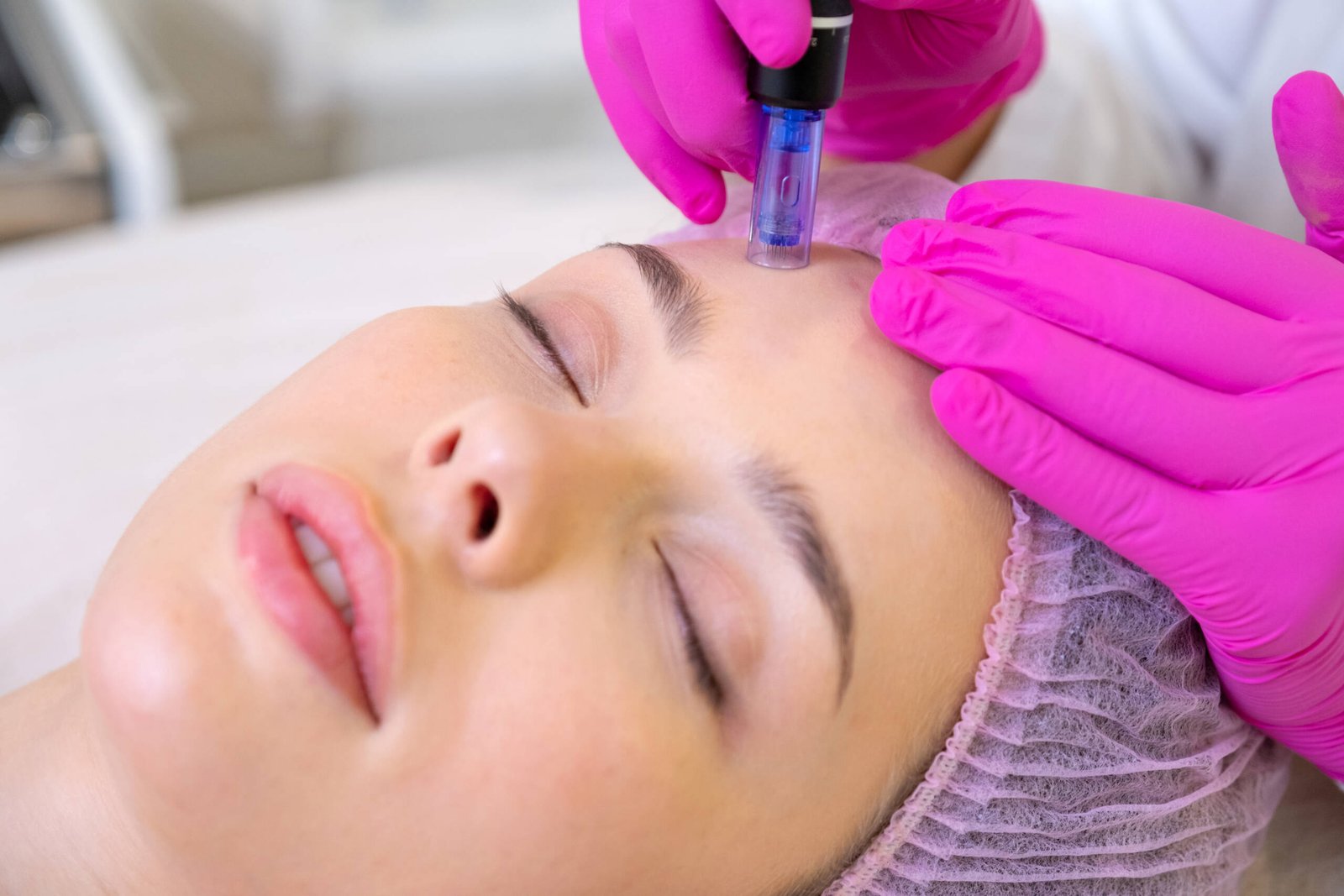
During a microneedling procedure, a medical-grade device equipped with fine, sterile needles creates uniform microchannels within the skin. These controlled micro-injuries are not damaging in the traditional sense; rather, they initiate a complex wound-healing cascade. This process involves the release of growth factors, increased fibroblast activity, and the subsequent production of new collagen and elastin fibers.
Collagen, in particular, plays a critical role in maintaining the skin’s structural integrity. As natural collagen production declines with age, the skin becomes thinner, less elastic, and more susceptible to wrinkles and textural irregularities. By stimulating neocollagenesis, microneedling effectively restores dermal density and resilience.
For patients seeking microneedling Stamford, this translates into visible improvements in skin tone, texture, and firmness—achieved not through temporary or artificial solutions, but through advanced biological regeneration.
Enhancing Outcomes with PRP Therapy
While microneedling alone is highly effective, its combination with Platelet-Rich Plasma (PRP) therapy represents a significant advancement in regenerative aesthetics. PRP is derived from the patient’s own blood and contains a concentrated volume of platelets, which are rich in growth factors essential for tissue repair and cellular turnover.
Once prepared, PRP is applied topically during or immediately after microneedling. The microchannels created during the procedure allow for deeper penetration of these bioactive components, thereby amplifying the skin’s regenerative response.
From a clinical perspective, the addition of PRP enhances both the speed and quality of healing. Patients often experience improved outcomes in terms of skin texture, luminosity, and overall rejuvenation. Furthermore, because PRP is autologous, originating from the patient’s own body, the risk of adverse reactions is minimal, making it a safe and biologically compatible adjunct to microneedling.
This synergistic approach has positioned microneedling Stamford with PRP as a preferred treatment protocol for individuals seeking natural yet clinically significant results.
PRP vs PRF: A Nuanced Approach to Regenerative Treatments
As regenerative therapies continue to advance, patients are increasingly encountering the distinction between PRP and Platelet-Rich Fibrin (PRF). While both are derived from blood and utilized for their growth factor content, their biological behavior differs in meaningful ways.
PRP is processed at higher speeds, resulting in a liquid concentrate that delivers a rapid release of growth factors. In contrast, PRF is spun more slowly, preserving a fibrin matrix that allows for a gradual, sustained release of these factors over time.
This distinction becomes particularly relevant in delicate treatment areas such as the under-eye region. PRF’s slower release profile and scaffold-like structure make it especially suitable for thin, fragile skin, where subtle and progressive improvement is preferred. PRP, however, remains exceptionally effective when used in conjunction with microneedling across larger treatment areas, particularly the face.
Understanding these differences allows providers to tailor microneedling Stamford treatments with a higher degree of precision, ensuring that each patient receives the most appropriate regenerative approach for their specific concerns.
Clinical Applications: Beyond Surface-Level Improvement
One of the defining advantages of microneedling is its versatility. Rather than targeting a single concern, it addresses a spectrum of dermatological issues by improving the underlying architecture of the skin.
In patients with acne scarring, microneedling disrupts fibrotic tissue while stimulating new collagen formation, gradually softening the appearance of depressions and uneven texture. For those experiencing early signs of aging, the treatment reinforces dermal density, reducing the visibility of fine lines and restoring elasticity.
Additionally, microneedling has gained recognition in the field of hair restoration. When applied to the scalp, it enhances microcirculation and stimulates dormant hair follicles. When combined with PRP, this approach can significantly improve hair thickness and density, offering a non-surgical option for patients experiencing thinning or early-stage hair loss.
These diverse applications underscore why microneedling Stamford has become an integral component of comprehensive aesthetic treatment plans.
Treatment Protocol and Expected Outcomes
A common misconception is that microneedling delivers immediate, one-time results. In reality, it is a progressive treatment that yields optimal outcomes through a series of sessions.
The number of treatments required depends on the severity of the condition being addressed. Patients seeking general skin rejuvenation may achieve noticeable improvements within three sessions, whereas those with deeper scarring or advanced signs of aging may require a more extended protocol.
Each session is typically spaced four to six weeks apart, allowing the skin sufficient time to complete its regenerative cycle. Over this period, collagen remodeling continues beneath the surface, meaning that results improve gradually rather than appearing abruptly.
Following treatment, patients can expect mild erythema and sensitivity, often comparable to a light sunburn. These effects typically resolve within a few days, making microneedling a practical option for individuals seeking effective results with minimal downtime.
Why Expertise Matters in Microneedling Treatments
The effectiveness of microneedling depends heavily on technique, device quality, and clinical expertise. Factors such as needle depth, treatment density, and the integration of adjunct therapies, such as PRP, must be carefully calibrated to achieve optimal outcomes without compromising skin integrity.
Choosing a reputable provider for microneedling Stamford ensures that treatments are performed within a controlled medical environment, adhering to strict safety and sterilization protocols. More importantly, it guarantees a customized approach that accounts for individual skin types, conditions, and long-term aesthetic goals.
A Regenerative Approach to Lasting Skin Health
Microneedling with PRP represents a shift in aesthetic medicine toward regenerative, evidence-based treatments that prioritize long-term skin health over temporary solutions. By stimulating collagen production and enhancing the skin’s natural repair mechanisms, this approach delivers results that are not only visible but structurally transformative.
For patients seeking meaningful improvement in tone, texture, and overall skin quality, microneedling Stamford stands out as a clinically proven pathway to rejuvenation. When performed with precision and paired with advanced therapies like PRP, the outcome is smoother, firmer, and more resilient skin that continues to improve over time.
At Versailles Med Spa, treatments are performed with a commitment to medical excellence, personalization, and natural-looking results. Each protocol is carefully tailored to the patient’s unique skin concerns, ensuring that every treatment not only enhances appearance but also supports the skin’s long-term vitality and health.